

Conventional Home Loans in North Carolina and South Carolina

A conventional loan is a mortgage that isn't insured by a government agency like FHA, VA or USDA. Most follow Fannie Mae and Freddie Mac guidelines. Eligible buyers can put as little as 3% down, use it for a primary home, second home or investment property, and remove private mortgage insurance later as they build equity.
Conventional loans often work best for buyers with good credit and steady income, but they're more flexible than many people expect.
I'm Paul Mattos, a mortgage broker with Refine Mortgage, licensed in North Carolina and South Carolina. I compare conventional financing from multiple wholesale lenders for first-time buyers, move-up buyers, relocation clients and investors, and show you the full payment and cash to close before you make an offer.
Conventional Loan Requirements in NC and SC at a Glance
Down payment: as little as 3% for eligible first-time buyers, 5% for most other primary-residence buyers, and 5% on an owner-occupied two- to four-unit home.
Credit: many lenders look for about 620. Fannie Mae removed its fixed 620 minimum for loans underwritten through its automated system in November 2025, but lender requirements still vary.
Debt-to-income: up to 50% with automated underwriting approval, depending on the full file.
PMI: required with less than 20% down. You can request removal at 80% of the original value, and it ends automatically at 78%.
2026 loan limit: $832,750 for a one-unit home in most NC and SC counties. Above that is a jumbo loan.
Seller credits: 3% with less than 10% down, 6% with 10% to 25% down, 9% with more than 25% down, and 2% on investment properties.
Property types: primary homes, second homes and investment properties.
Down payment assistance: currently offered with FHA loans through wholesale lender programs, usually a second mortgage that may be forgivable or repayable.
Is a Conventional Loan Right for You?
A conventional loan often fits well when you:
Have a credit score around 680 or higher, which usually means better pricing and lower PMI
Can put at least 3% to 5% down
Want mortgage insurance you can remove later
Are buying a second home, an investment property or a condo that isn't FHA-approved
Another loan may fit better when:
Your credit score is lower or your debt-to-income ratio is high. Compare FHA loans.
You're an eligible veteran or service member. Compare VA loans.
You're buying in an eligible rural or suburban area and want no down payment. Compare USDA loans.
You're self-employed and your tax returns don't show enough income. See Non-QM loans.
I'll compare them side by side for the same home.
Conventional Loan Details
-
Qualified first-time homebuyers may have conventional options requiring as little as 3% down. A 5% down payment is common for many other primary-residence purchases, although requirements can vary based on occupancy, property type, income limits and automated underwriting findings.
Conventional financing may also be available for second homes and investment properties, but these transactions generally require larger down payments than primary-residence purchases.
Down payment assistance programs are sometimes available with conventional loans, but availability changes. I currently offer assistance with FHA loans through wholesale lender programs, usually as a second mortgage that may be forgivable or repayable. If you need help with the down payment, I’ll compare FHA with assistance against conventional options.
A larger down payment can lower your monthly payment and mortgage insurance cost, and with 20% or more down, PMI isn't required. See is it better to put more money down?
The best down payment is not automatically the largest one. I compare the payment, cash required, mortgage insurance and remaining reserves before recommending a structure.
I offer down payment assistance through wholesale lender programs, and some can be combined with conventional financing. This assistance is usually a second mortgage that may be forgivable or repayable, depending on the program.
A larger down payment can lower your monthly payment and mortgage insurance cost, and with 20% or more down, PMI isn't required. See is it better to put more money down?
-
Many lenders look for a score of about 620 for conventional financing. In November 2025, Fannie Mae removed its fixed 620 minimum for loans approved through its automated underwriting system, so some borrowers with lower scores may be considered. Lender requirements still vary.
Your score also affects your rate and PMI cost. Scores of 740 and higher typically get the best pricing, while lower scores usually mean higher PMI. Credit history, income, debts, down payment and reserves all matter too.
-
Private mortgage insurance, commonly called PMI, is generally required when a buyer uses a conventional loan and puts less than 20% down. PMI protects the lender, but it allows qualified buyers to purchase a home without waiting until they have a full 20% down payment.
The cost of PMI can vary based on factors such as:
Credit score
Down payment
Loan amount
Property type
Mortgage-insurance structure
PMI does not necessarily remain for the entire loan. For many conventional mortgages, homeowners may request cancellation when the loan balance is scheduled to reach 80% of the home’s original value, provided applicable requirements are met. PMI is generally scheduled to terminate automatically at 78% if the loan is current. Other cancellation options may depend on the loan investor, payment history and current property value.
Putting less than 20% down is not automatically a bad financial decision. I compare the PMI cost, monthly payment, cash required at closing and money remaining in reserves to help buyers choose the structure that fits their overall goals.
Learn more in my guide: How to Remove PMI Without Refinancing
-
Many conventional loans require an appraisal to confirm the property’s market value and help identify potential collateral concerns.
However, some qualified transactions may receive an appraisal waiver or alternative valuation option through Fannie Mae or Freddie Mac’s automated underwriting systems. A waiver is not guaranteed and depends on the property, transaction, available data and underwriting findings.
Even when an appraisal waiver is available, buyers should understand that an appraisal is different from a home inspection. A home inspection evaluates the property’s condition for the buyer, while an appraisal primarily supports the lender’s collateral review.
-
Conventional loans can be used to finance several different types of properties, but the down payment, interest rate, reserve requirements and qualification guidelines may change depending on how the property will be used.
Primary residence
A primary residence is the home where you intend to live for most of the year. Primary-residence conventional loans generally provide the lowest down-payment options and most favorable financing terms. Some qualified buyers may be eligible for as little as 3% down.
Second home
A second home is typically a property you will personally occupy for part of the year, such as a vacation home. Second homes generally require a larger down payment than a primary residence and must meet specific occupancy and property requirements. A property primarily purchased to generate rental income may need to be financed as an investment property instead.
Investment property
An investment property is purchased primarily to generate rental income or build long-term wealth. Conventional investment-property loans generally require larger down payments, stronger credit profiles and additional financial reserves. The property type, number of financed properties and expected rental income can also affect qualification.
It is important to classify the property correctly. I help buyers compare the available options and structure the financing based on how they genuinely plan to use the home.
Learn more:
-
Seller credits are funds the seller agrees to contribute toward certain buyer expenses at closing. They can help reduce the buyer’s upfront cash requirement and may be used for eligible costs such as:
Lender and closing fees
Discount points
Temporary or permanent interest-rate buydowns
Prepaid homeowners insurance
Prepaid property taxes
Initial escrow deposits
The maximum conventional seller credit generally depends on the property’s occupancy and loan-to-value ratio:
More than 90% loan-to-value: Up to 3%
75.01% to 90% loan-to-value: Up to 6%
75% loan-to-value or lower: Up to 9%
Investment properties: Up to 2%
For example, a primary-residence buyer putting 3% or 5% down would generally be limited to a 3% seller credit.
Seller credits cannot be used for the buyer’s required down payment or reserve requirement. They also cannot exceed the buyer’s actual eligible closing costs. Any unused portion is generally forfeited, so the credit should be carefully calculated before it is written into the purchase contract.
A seller credit can sometimes benefit a buyer more than an equivalent price reduction, especially when the buyer wants to reduce cash needed at closing or use discount points to lower the mortgage payment.
Learn more in my complete guide: How Seller Credits Can Lower Your Payment
-
Conventional and FHA loans can both provide low-down-payment options, but they have different qualification requirements, mortgage-insurance structures and long-term costs.
Conventional loans are not government-backed and may work particularly well for buyers with stronger credit, stable income and lower debt-to-income ratios. Some qualified buyers may be eligible for as little as 3% down. Conventional private mortgage insurance is often influenced by the buyer’s credit and down payment, and it may eventually be removed when applicable requirements are met.
FHA loans are insured by the Federal Housing Administration and require a minimum down payment of 3.5% for many qualified buyers. FHA financing may provide additional flexibility for buyers with lower credit scores, higher debt-to-income ratios or previous credit challenges. FHA loans include upfront and annual mortgage insurance, and the annual mortgage insurance may remain for the life of the loan depending on the original down payment and loan term.
Other important differences can include:
FHA allows up to 6% in eligible seller contributions.
Conventional seller-credit limits depend on occupancy and loan-to-value ratio.
FHA appraisals include minimum property requirements that may identify certain health, safety or condition concerns.
Conventional financing can be used for primary homes, qualifying second homes and investment properties.
FHA financing is generally limited to qualifying primary residences.
Neither loan is automatically better. I compare the interest rate, mortgage insurance, monthly payment, cash required at closing and long-term cost to determine which structure better fits the buyer.
Learn more:
-
Conforming and jumbo loans are both conventional mortgages, but the difference primarily comes down to the loan amount, not the home’s purchase price.
A conforming loan falls within the annual loan limits established by the Federal Housing Finance Agency and generally meets guidelines established by Fannie Mae or Freddie Mac. For 2026, the baseline conforming loan limit for a one-unit property is $832,750 in most areas, including most North Carolina and South Carolina counties.
A jumbo loan exceeds the applicable conforming loan limit. Jumbo financing is commonly used for higher-priced homes throughout areas such as:
SouthPark
Ballantyne
Lake Norman
Waxhaw
Fort Mill
Charlotte’s luxury-home market
Because jumbo loans are not purchased under standard Fannie Mae or Freddie Mac conforming guidelines, qualification requirements can vary considerably between lenders. Jumbo loans may require:
Stronger credit
Larger down payments
Lower debt-to-income ratios
Additional financial reserves
More extensive income and asset documentation
A higher-priced home does not automatically require a jumbo loan. The classification is based on the final loan amount after subtracting the buyer’s down payment.
As a mortgage broker, I can compare conforming and jumbo options across multiple wholesale lenders because pricing, reserve requirements and qualification guidelines may differ substantially.
Learn more in my complete guide: Conforming vs. Jumbo Loans: What Carolina Buyers Need to Know
-
Yes, some buyers can use a conventional loan to purchase their next home before selling their current property. This is common for move-up buyers who want to avoid coordinating two closings or making an offer contingent on their existing home selling.
The most important question is whether the buyer can qualify while temporarily owning both properties. The lender may need to include:
The current mortgage payment
The proposed mortgage payment
Property taxes and homeowners insurance
HOA dues
Other monthly debts
Required financial reserves
Possible strategies may include:
Qualifying while carrying both mortgage payments
Using a HELOC or bridge loan to access existing equity
Selling the current home before the new purchase closes
Converting the current residence into a rental when applicable guidelines are met
Making a larger down payment and potentially recasting the new mortgage after the current home sells
The best strategy depends on the buyer’s income, debts, available equity, reserves, timeline and comfort with temporarily carrying two properties. Before making an offer, I compare the payment and cash-to-close options so the buyer understands the complete financial picture.
Learn more:
Conventional Loans in the Charlotte Area
A few local details can change your conventional loan numbers:
South Carolina property taxes: a primary home in South Carolina can be taxed at the 4% owner-occupied rate instead of 6%, but you must apply with the county. Second homes and rentals stay at 6%. See North Carolina vs. South Carolina property taxes.
Condos and townhomes: many Charlotte condo buildings, especially in Uptown and South End, aren't FHA-approved, so conventional is often the main option. The project still has to meet conventional guidelines.
New construction: builder incentives on conventional loans follow the same 3%, 6% and 9% seller credit limits. The first tax bill on a new home may cover only the land.
Jumbo areas: homes in parts of SouthPark, Ballantyne, Lake Norman, Waxhaw and Fort Mill can go above the $832,750 conforming limit. A larger down payment may keep you conforming. See conforming vs. jumbo loans.
A Real Conventional Loan Client Experience

“We had a wonderful experience working with Paul and the entire Refine Mortgage team. Paul was always responsive, professional, and made the whole process much less stressful. Thanks to his guidance, everything went smoothly, and we’re now happily settling into our new home. Highly recommend!”
How My Conventional Loan Process Works
A strong conventional loan starts before an offer is submitted. My goal is to review the complete financial picture upfront, provide realistic numbers and reduce avoidable surprises during underwriting.
Talk through your goals. We discuss where you want to buy, your timeline, the monthly payment you're comfortable with and how much cash you want to keep after closing.
Application and documents. You complete a secure application and upload documents such as pay stubs, W-2s or tax returns, and bank statements. I review them upfront instead of issuing a letter based only on what's typed into an application.
Credit, income and underwriting review. I review your credit, income, debts and assets and run your file through automated underwriting, so questions get answered before you start making offers.
Compare your options. I compare loan programs, down payments, rate and point options and mortgage insurance from multiple wholesale lenders.
Total Cost Analysis before your offer. When you find a home, I prepare a Total Cost Analysis using that property's taxes, insurance and HOA dues, showing your full payment and cash to close. I can also talk with your agent and the listing agent about the strength of your financing.
Processing, underwriting and closing. Once you're under contract, my team handles the appraisal, title, insurance and underwriting conditions and keeps you, your agent and the closing attorney updated through closing. Closing dates depend on appraisal, title, underwriting and the purchase contract.
Frequently Asked Questions About Conventional Loans
-
No. Conventional loans are available to first-time buyers, repeat buyers, move-up buyers, second-home buyers and real estate investors. However, certain 3% down conventional programs may have first-time-homebuyer or income requirements.
-
Some qualified buyers may be eligible for as little as 3% down. A 5% down payment is common for many other primary-residence purchases. Second homes, investment properties and certain property types generally require larger down payments.
-
Many lenders look for about 620, though Fannie Mae no longer sets a fixed minimum for loans approved through its automated system. Credit history, income, debts, down payment and reserves are also considered.
-
Yes. Many buyers use conventional loans with 3%, 5%, 10% or 15% down. Private mortgage insurance is generally required when the down payment is less than 20%, but the cost varies based on the complete loan profile.
-
In many cases, yes. Homeowners may be able to request PMI cancellation when the loan reaches applicable equity and payment-history requirements. Borrower-paid PMI is also generally scheduled to terminate automatically at 78% of the home’s original value when the loan is current.
-
Gift funds may be allowed for eligible primary-residence or second-home transactions when the donor, transfer and documentation satisfy conventional guidelines. Buyers should speak with their lender before moving gift money.
-
Yes. Conventional loans allow seller credits, but the limit depends on the occupancy type and loan-to-value ratio. Seller credits can generally cover eligible closing costs, prepaid expenses and interest-rate buydowns, but they cannot replace the required down payment.
-
Yes. Conventional financing can be used for qualifying rental and investment properties. These loans generally require larger down payments, stronger financial profiles and additional reserves compared with primary-residence financing.
-
Not necessarily. Some transactions may receive an appraisal waiver or alternative valuation through the automated underwriting system. Availability depends on the property, transaction and information available to Fannie Mae or Freddie Mac.
-
The timeline depends on documentation, appraisal requirements, title work and the borrower’s overall situation. A thoroughly reviewed preapproval and quick document submission can help avoid unnecessary delays.
-
No. Conventional financing may be more attractive for some buyers, while FHA may offer greater flexibility for others. The best comparison includes the interest rate, mortgage insurance, payment, cash required and long-term cost, not just the down payment.
-
Yes. You can buy a two- to four-unit home with as little as 5% down if you live in one unit, and projected rent from the other units may help you qualify.
Learn more about qualifying in my guide: How Do I Qualify for a Home Loan?
Learn More About Conventional Home Loans With These Articles
A Past Client’s Experience
Understanding your financing matters throughout the mortgage process. My approach is to explain the options, answer questions and keep you informed about the next
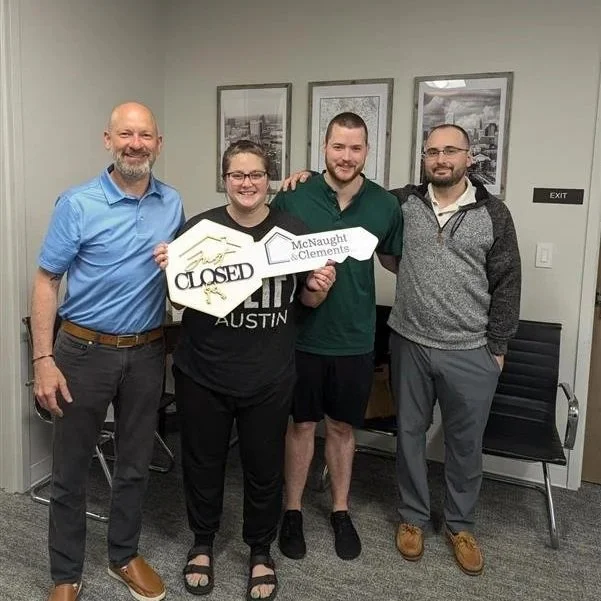
“He explained everything in detail, always ensured we understood the current information as well as next steps”
Ready to Compare Your Conventional Loan Options?
The right conventional loan involves more than the interest rate. Your down payment, monthly payment, PMI, closing costs and remaining savings should all work together. Schedule a consultation and I'll compare your options and the full numbers before you make an offer.
Sources and Additional Information
Mortgage guidelines and loan limits can change over time. The following official resources provide additional information about conventional mortgage requirements, conforming loan limits, mortgage options and private mortgage insurance:
Fannie Mae Selling Guide — Official eligibility, underwriting, income, asset and property requirements for mortgages delivered to Fannie Mae.
Freddie Mac Single-Family Seller/Servicer Guide — Official requirements for mortgages delivered to Freddie Mac.
FHFA Conforming Loan Limits — Current conforming loan limits established by the Federal Housing Finance Agency.
Consumer Financial Protection Bureau Mortgage Resources — Consumer information about mortgage options, loan estimates, closing documents and homeownership.
When Can I Remove Private Mortgage Insurance? — CFPB guidance regarding PMI cancellation and automatic termination.
Reviewed by Paul Mattos
Paul Mattos
Mortgage Broker | Refine Mortgage
Carolina Home Financing
NMLS# 2339069 | Licensed in NC and SC
Call or text: 980-221-4959
Email: paulm@refinemortgage.net
Last reviewed: October 2026
Refine Mortgage Inc. | NMLS# 2417960 | Equal Housing Lender. This page provides general educational information and is not a commitment to lend, a rate quote or an offer of specific credit terms. Loan eligibility, pricing, mortgage insurance and program requirements depend on the borrower, property, loan structure, investor guidelines and underwriting approval. Not all applicants will qualify.